Headless commerce has become one of the most discussed ecommerce architectures — but it’s not the right choice for every store at every stage.
Understanding when to move to headless commerce is far more important than knowing how to implement it.
This guide explains the headless commerce benefits, the warning signs that indicate readiness, and the scenarios where staying traditional is the smarter choice.
“Headless commerce isn’t about being modern — it’s about being ready.”
What Is Headless Commerce? (Quick Recap)
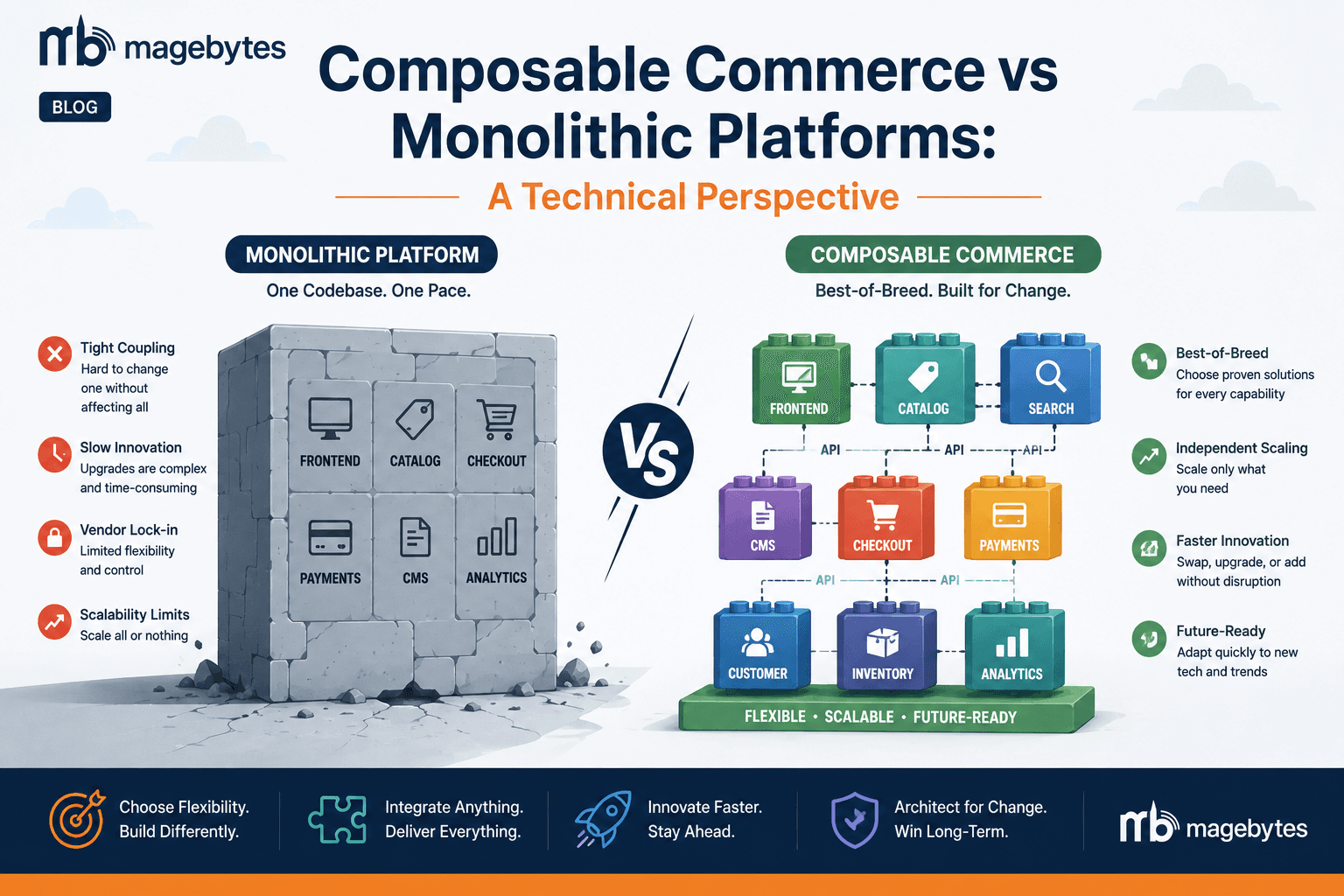
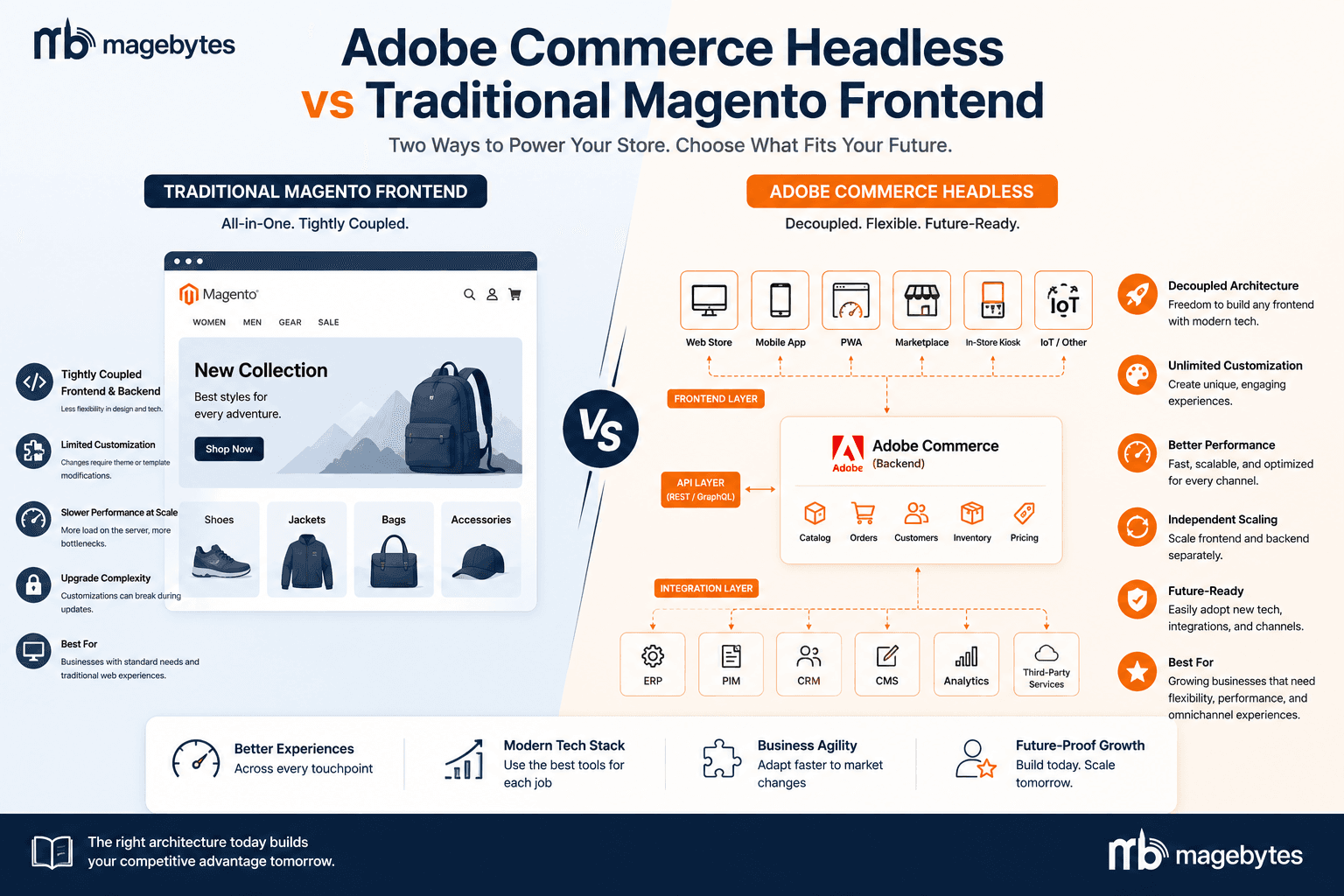
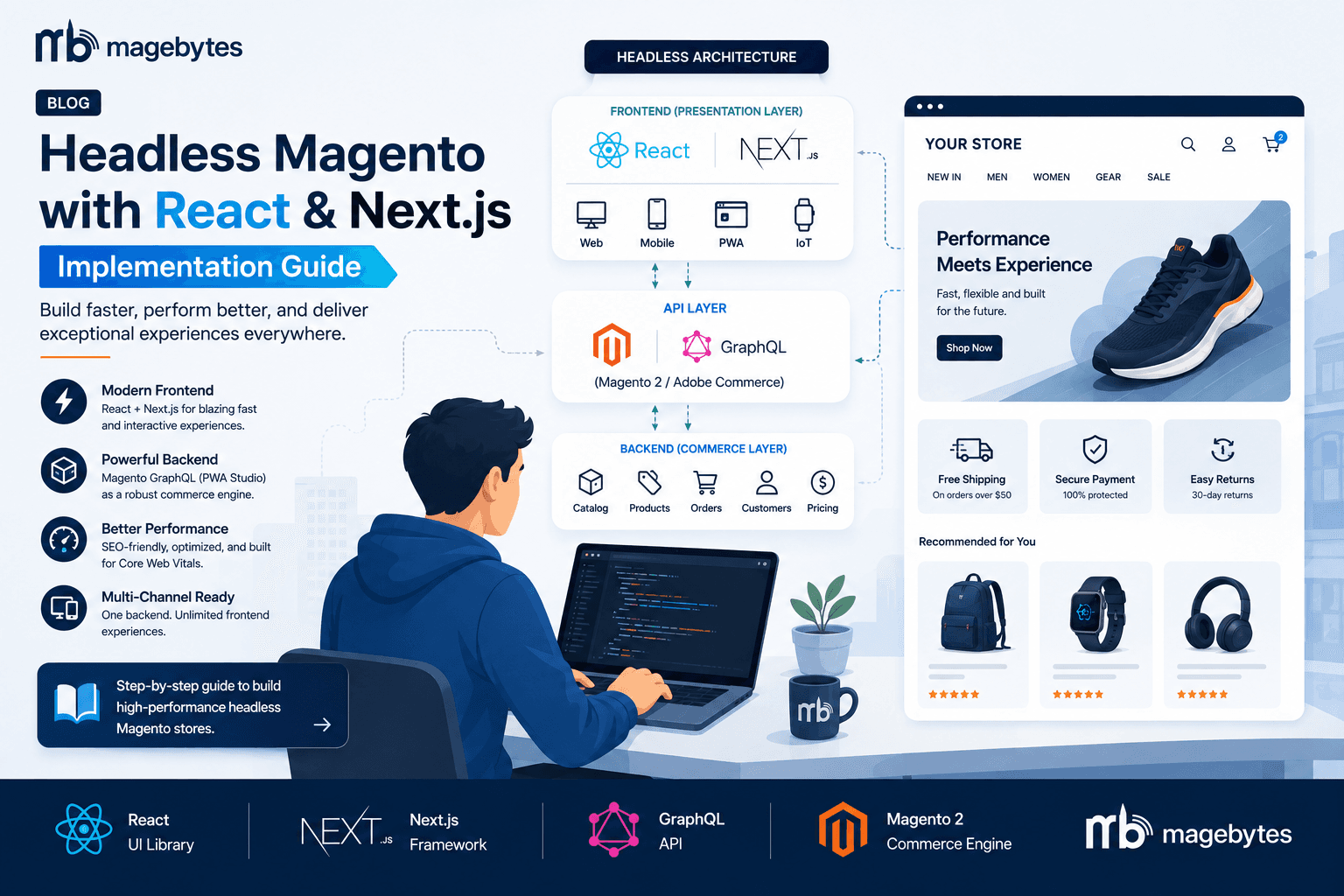
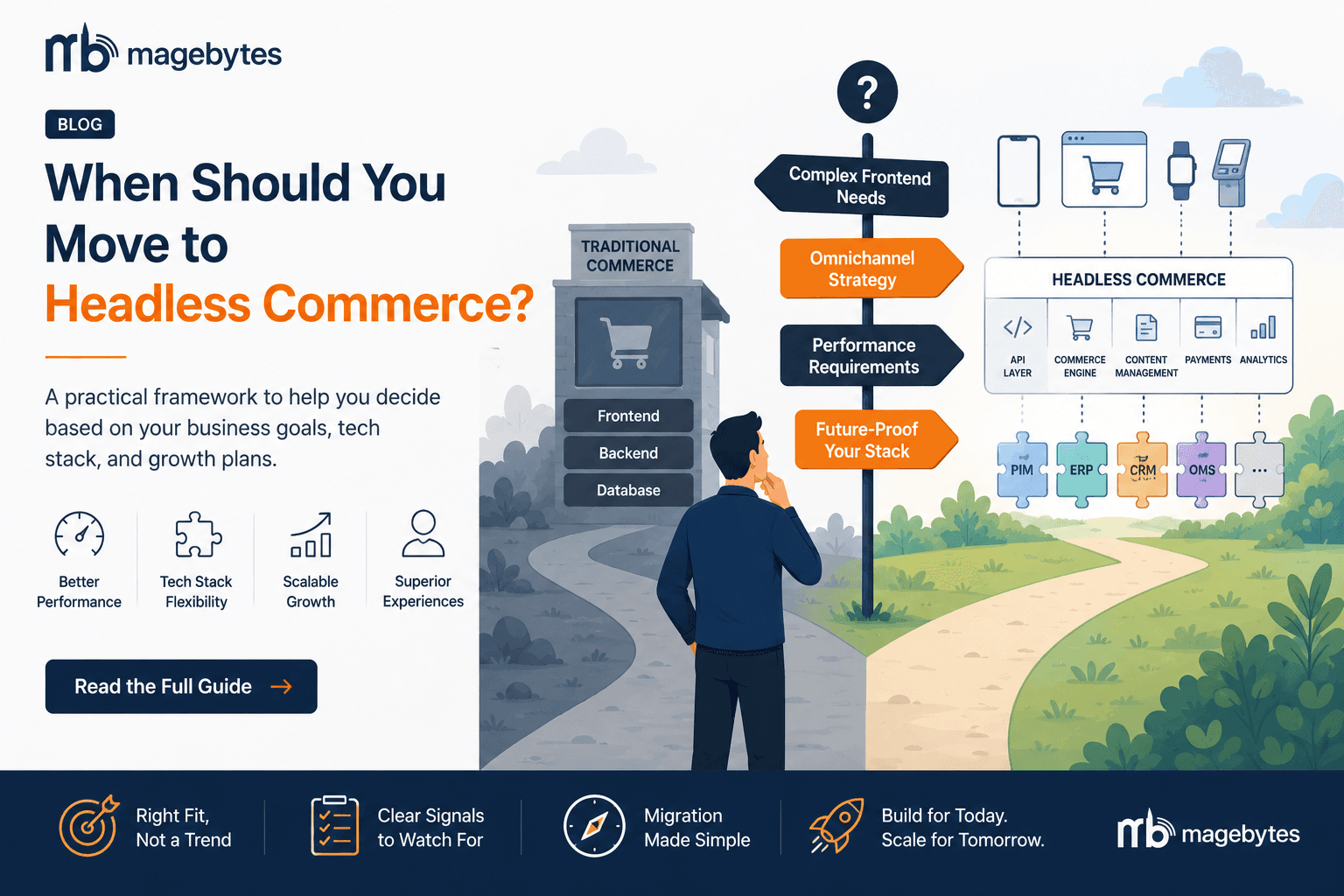
Headless commerce is an architecture where:
- Frontend (UI) is decoupled
- Backend handles commerce logic
- APIs connect everything
- Frontend can be built with any framework
This separation allows faster experiences, greater flexibility, and omnichannel expansion.
Why Businesses Consider Headless Commerce
Companies typically explore headless when they experience limitations such as:
- Slow frontend performance
- Theme or platform constraints
- Difficulty launching new channels
- Heavy frontend dependencies
- Poor mobile experience
These challenges highlight the need for architectural flexibility.
“You don’t move to headless because it’s trending — you move because your current system can’t keep up.”
Key Headless Commerce Benefits
Before deciding when to migrate, it’s important to understand the real value.
1. Faster Performance
- Improved page load speed
- Better Core Web Vitals
- Faster Time to First Byte
2. Frontend Flexibility
- Custom UX design
- No theme limitations
- Modern frameworks (React, Next.js, Vue)
3. Omnichannel Commerce
- Web
- Mobile apps
- POS
- Marketplaces
- IoT devices
4. Independent Scaling
- Scale frontend separately
- Reduce backend pressure
- Handle traffic spikes easily
“Headless commerce decouples growth from platform limitations.”
Clear Signs You Should Move to Headless Commerce
1. Your Website Performance Is Limiting Conversions
If your store struggles with:
- Poor LCP
- Slow mobile speed
- High bounce rates
Headless can significantly improve performance.
2. You Need a Custom UX Beyond Themes
If your brand requires:
- Advanced personalization
- Custom product journeys
- Dynamic layouts
Traditional themes become restrictive.
3. You’re Expanding to Multiple Channels
Headless becomes critical when selling across:
- Mobile apps
- International storefronts
- Marketplaces
- In-store experiences
“Omnichannel commerce is nearly impossible without headless architecture.”
4. Frontend Changes Take Too Long
If simple UI updates require:
- Backend deployments
- Theme overrides
- Platform workarounds
Decoupling frontend and backend improves development velocity.
5. You Have Strong Development Resources
Headless commerce requires:
- Frontend engineers
- API expertise
- DevOps maturity
If your team is ready, headless becomes viable.
When You Should NOT Move to Headless
Headless is not always the right choice.
Avoid headless if:
- You’re early-stage
- You rely heavily on platform themes
- Your team is non-technical
- Your store is relatively simple
- Budget is limited
“Headless commerce solves scale problems — not startup problems.”
Headless Commerce vs Traditional Setup
| Area | Traditional | Headless |
|---|---|---|
| Setup speed | Fast | Slower |
| Flexibility | Limited | High |
| Performance | Moderate | High |
| Cost | Lower | Higher |
| Scalability | Limited | Excellent |
Ideal Business Stage for Headless Commerce
Headless is best suited for:
- Fast-growing brands
- Enterprise ecommerce
- High-traffic stores
- International operations
- Experience-driven brands
Common Headless Commerce Use Cases
- Enterprise replatforming
- Mobile-first commerce
- Global brand expansion
- Performance optimization
- Personalization-heavy stores
“You move to headless when ecommerce becomes a product — not just a store.”
Decision Checklist: Are You Ready?
✔ Performance limits affecting growth
✔ Multiple sales channels
✔ Custom UX requirements
✔ API-first mindset
✔ Engineering team in place
✔ Long-term scalability goals
If you check 4+ boxes — headless is likely the right move.
Migration Strategy Recommendation
Instead of a full rebuild:
- Start with hybrid headless
- Decouple frontend gradually
- Migrate high-impact pages first
- Maintain backend stability
This reduces risk and cost.
Conclusion
Understanding when to move to headless commerce is about timing — not trends.
Headless commerce benefits are significant, but only when your business has outgrown traditional platforms.
Move too early, and complexity slows you down.
Move too late, and platform limitations hold you back.
“Headless commerce isn’t the future for everyone — only for those ready to scale into it.”