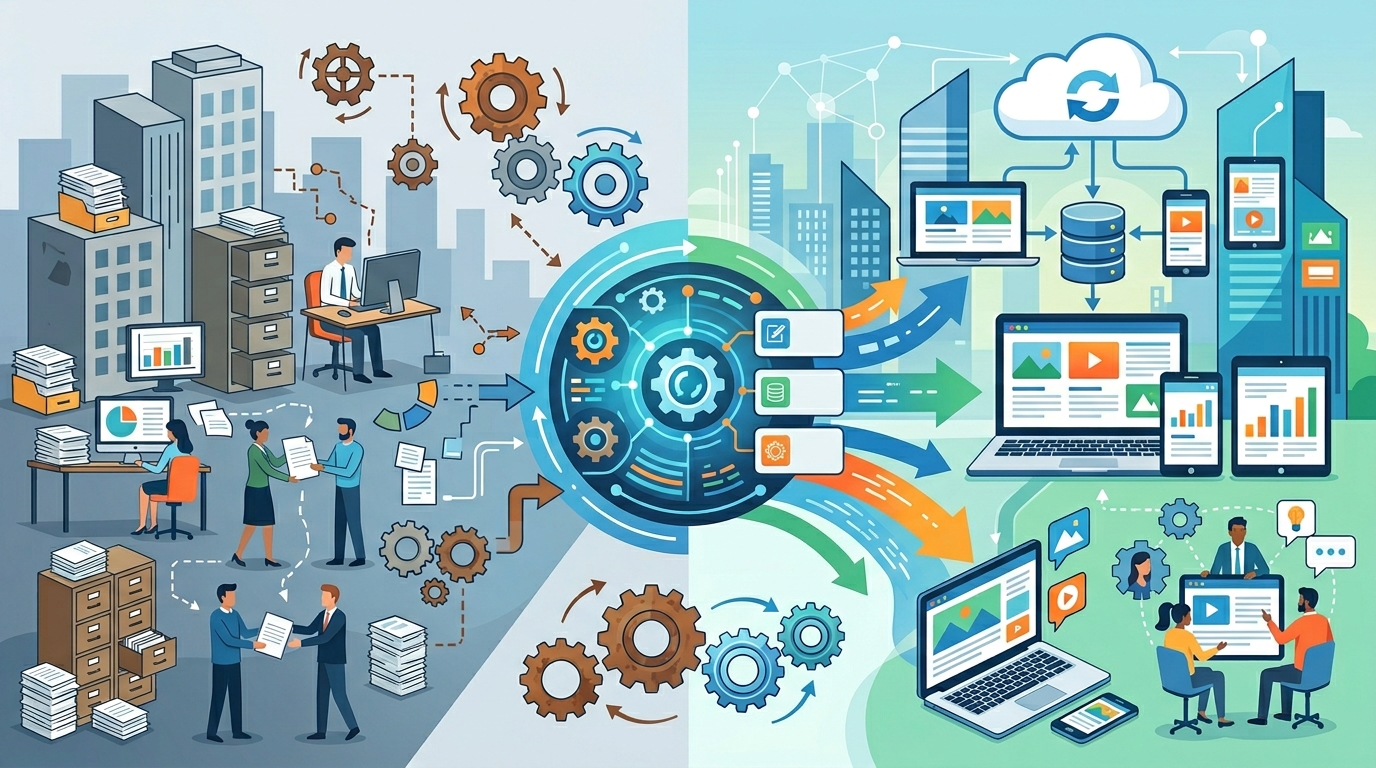
In today’s fast-changing digital world, enterprises are under constant pressure to deliver faster, smarter, and more personalized digital experiences. Customers expect seamless interactions across websites, mobile apps, and other digital platforms. To meet these expectations, businesses are increasingly relying on CMS development for digital transformation.
A Content Management System (CMS) is no longer just a tool for managing website content—it has become a core part of enterprise digital strategy. Modern CMS development helps organizations streamline operations, improve customer experience, and enable scalable digital growth.
In this article, we will explore how CMS development drives digital transformation in enterprises and why it has become essential for modern businesses.
Understanding CMS in the Enterprise Digital Era
A Content Management System (CMS) is a platform that allows businesses to create, manage, and publish digital content without complex coding. Popular CMS platforms include WordPress, Drupal, and enterprise-level solutions like Adobe Experience Manager and headless CMS systems.
For enterprises, CMS development goes beyond basic content publishing. It focuses on building scalable, secure, and integrated digital ecosystems that support multiple channels, teams, and business goals.
1. Centralized Content Management Across the Organization
One of the biggest challenges enterprises face is managing content across multiple departments and platforms. CMS development solves this by providing a centralized system where all content is created, edited, and managed in one place.
This centralization ensures:
- Consistent brand messaging
- Faster content updates
- Better collaboration between teams
- Reduced duplication of efforts
With CMS development, enterprises can maintain control over large volumes of digital content efficiently.
2. Faster Digital Experience Delivery
Speed is a critical factor in digital transformation. Customers expect real-time updates and instant access to information. CMS development enables businesses to publish and update content quickly without depending heavily on technical teams.
This agility helps enterprises:
- Launch campaigns faster
- Update product information instantly
- Respond quickly to market changes
- Improve customer engagement
As a result, businesses become more responsive and competitive in the digital landscape.
3. Seamless Omnichannel Experience
Modern customers interact with brands across multiple channels—websites, mobile apps, social media, and even IoT devices. CMS development plays a crucial role in delivering a consistent omnichannel experience.
With advanced CMS solutions like headless CMS, content can be delivered to any platform using APIs. This ensures:
- Consistent messaging across all channels
- Unified customer experience
- Easier content distribution
- Better brand recognition
Enterprises can engage customers wherever they are, without rebuilding content for each platform.
4. Improved Scalability for Growing Enterprises
As businesses grow, their digital infrastructure must scale with them. CMS development supports this growth by offering flexible architecture that can handle increasing traffic, content, and integrations.
Scalable CMS systems allow enterprises to:
- Add new websites or portals easily
- Handle large volumes of traffic
- Expand into global markets
- Integrate new technologies smoothly
This scalability ensures long-term digital sustainability.
5. Integration with Enterprise Systems
Digital transformation is not just about websites—it involves connecting multiple business systems. CMS development enables seamless integration with tools like:
- Customer Relationship Management (CRM) systems
- Enterprise Resource Planning (ERP) systems
- Marketing automation platforms
- Analytics and data tools
These integrations help businesses automate workflows, improve decision-making, and gain better insights into customer behavior.
6. Enhanced Security and Compliance
Enterprises handle sensitive customer data and business information. Security is a top priority in digital transformation. Modern CMS development includes strong security features such as:
- Role-based access control
- Data encryption
- Regular security updates
- Compliance with industry standards
This ensures that enterprise websites remain secure, reliable, and compliant with regulations.
7. Data-Driven Decision Making
CMS platforms today are integrated with analytics tools that provide valuable insights into user behavior, content performance, and engagement metrics.
With CMS development, enterprises can:
- Track user interactions
- Identify high-performing content
- Optimize marketing strategies
- Improve conversion rates
This data-driven approach helps businesses make smarter decisions and improve overall performance.
Conclusion
CMS development for digital transformation is no longer optional for enterprises it is a necessity. It empowers organizations to manage content efficiently, deliver seamless omnichannel experiences, improve scalability, and integrate with critical business systems.
By investing in modern CMS development, enterprises can accelerate their digital transformation journey, enhance customer experiences, and stay competitive in an increasingly digital world.
A well-planned CMS strategy not only simplifies content management but also becomes the backbone of long-term digital success.