The Hyvä Magento theme has revolutionized Magento frontend development with its speed, simplicity, and modern technologies like Alpine.js and Tailwind CSS. However, developers sometimes face challenges during implementation, especially when migrating from Luma or integrating complex customizations. Understanding these common issues and their solutions ensures a smoother Hyvä adoption and a high-performing Magento store.
“Even the fastest Magento theme can face hurdles—knowing the fixes ahead of time makes Hyvä implementation seamless.”
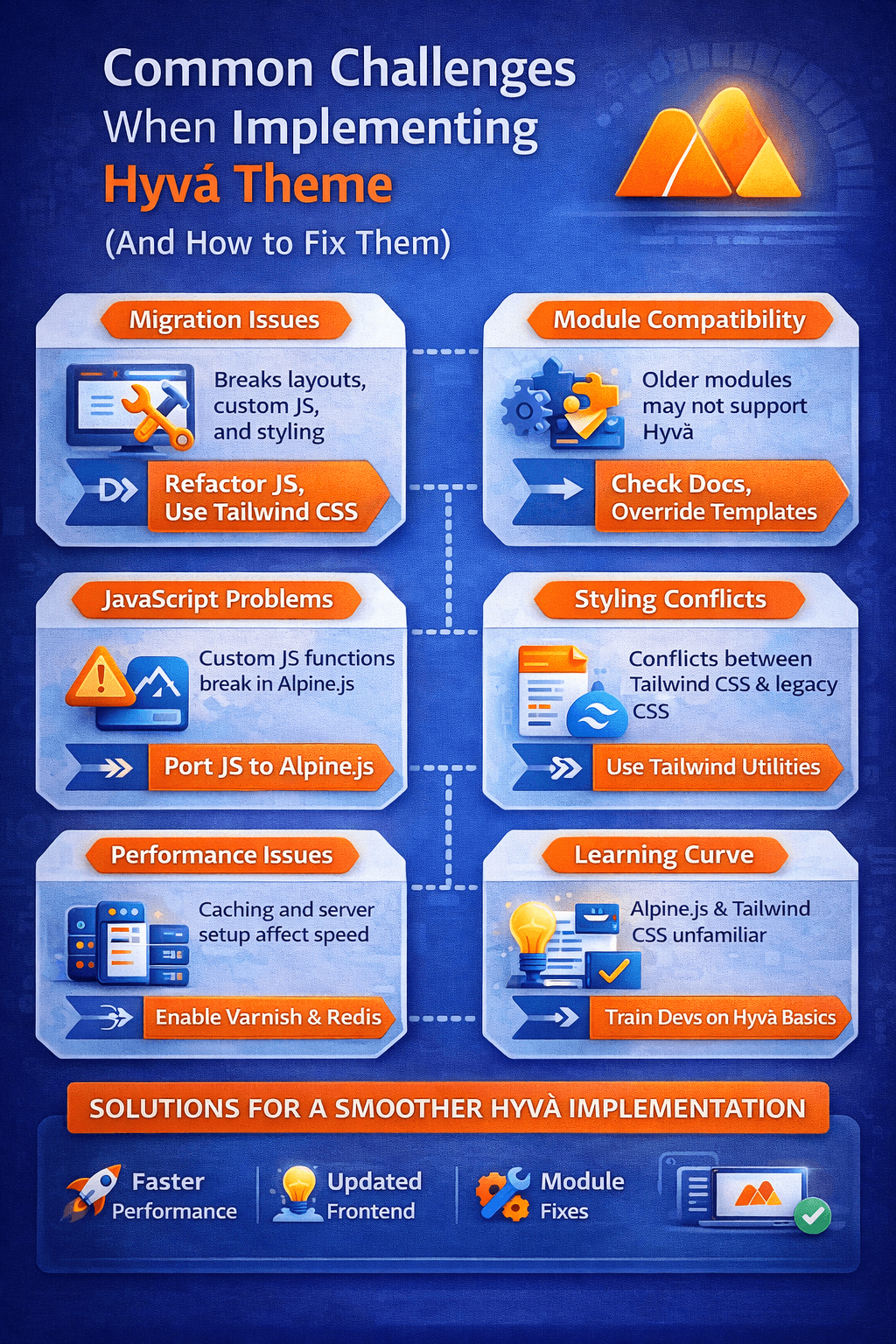
1. Migration from Luma or Custom Themes
Challenge:
Migrating from the default Luma theme or heavily customized themes can break layouts, custom JS, and styling because Hyvä uses a different frontend stack.
Solution:
-
Audit all existing customizations before migration
-
Rewrite JS using Alpine.js instead of Knockout.js
-
Convert CSS to Tailwind CSS utilities
-
Test all critical pages in a staging environment before going live
2. Third-Party Module Compatibility
Challenge:
Not all Magento 2 modules are Hyvä-ready. Modules using Knockout.js or outdated frontend templates may fail or display incorrectly.
Solution:
-
Check module documentation for Hyvä support
-
Override templates with Hyvä-compatible layout files if needed
-
Consider alternative modules that follow modern Magento 2 frontend standards
3. Custom JavaScript Issues
Challenge:
Developers may encounter issues when porting custom JS functionality due to Alpine.js’ reactive approach.
Solution:
-
Refactor legacy JS for Alpine.js
-
Use Alpine.js directives for reactive components instead of jQuery or Knockout bindings
-
Test interactive features like sliders, modals, and dropdowns thoroughly
4. Styling Conflicts
Challenge:
Tailwind CSS introduces utility-first styling, which can conflict with inline styles or custom Luma CSS.
Solution:
-
Remove redundant Luma CSS overrides
-
Use Tailwind utilities for all new styles
-
Customize Tailwind configuration for theme-specific colors, fonts, and spacing
-
Test responsiveness on multiple devices
5. Performance Optimization
Challenge:
Even with Hyvä, improper server configuration or caching can affect performance.
Solution:
-
Enable Varnish full-page caching
-
Use Redis for session and cache management
-
Optimize images and media
-
Monitor Lighthouse scores and Core Web Vitals regularly
6. Developer Learning Curve
Challenge:
Developers accustomed to Luma or legacy frontend may struggle with Alpine.js and Tailwind CSS initially.
Solution:
-
Provide training on Alpine.js reactivity and Tailwind utility classes
-
Follow Hyvä’s official developer documentation and migration guides
-
Start with small components before scaling to full storefront customization
Conclusion
Implementing the Hyvä Magento theme brings unmatched performance and modern frontend architecture, but developers must navigate challenges such as migration, module compatibility, custom JS, and styling conflicts. With careful planning, proper training, and attention to best practices, these issues can be resolved quickly, resulting in a high-performing, scalable, and maintainable Magento store.
“Challenges are part of the journey—overcoming them ensures your Magento store fully benefits from Hyvä’s speed and simplicity.”